24/7 BREAKDOWN LINE  0115 944 1036

Inverter Drive Systems Ltd

IDS are ABB Inverter specialists. We specify, install, commission, repair, service and hire variable speed drives.

Harmonic Filters & Power Quality Solutions

Power quality problems such as harmonics, load imbalance and poor power factor can lead to early equipment failures, higher energy costs, reduced efficiency and even non-compliance with grid regulations. For many organisations, these issues also mean costly downtime and shortened equipment life.

At IDS, we deliver Hitachi Energy’s Active Harmonic Filters –The PQACTIF Active harmonic Filter being the latest based on 3 Level inverter topology and modular. We provide a complete service from consultation, power quality survey and supply through to installation, commissioning and support.

What Are Harmonics?

Harmonics are distortions in the electrical waveform caused by non-linear loads such as variable speed drives, UPS systems, LED lighting, EV chargers and other non linear industrial loads. Left untreated, harmonics can:

  • Cause overheating of cables, transformers and motors
  • Lead to nuisance tripping and malfunctions in sensitive equipment
  • Increase system losses, lowering energy efficiency
  • Reduce the lifespan of electrical assets
  • Failure to meet grid code compliance
  • Harmonics destroy capacitors used in power factor correction
  • Poor power factor also attracts a penalty surcharge from the utility

Active harmonic filters, such as PQactiF, provide an effective solution by continuously monitoring and compensating harmonic currents.

PQactiF – Modular Active Harmonic Filters

 PQactiF is the part of the  ABB’s proven PQF range ( Now Hitachi), delivering even greater efficiency, flexibility and modularity. Designed for both new installations and retrofits, it helps businesses maintain compliance, improve reliability and achieve energy savings.

Key Features:

  • Modular, scalable design (20–400 A per cabinet)
  • Filters up to 25 individual harmonics simultaneously (2nd to 50th order) in a 3 wire configuration and up to 25 individual harmonics simultaneously in a 4 wire configuration
  • Load balancing in 3-wire and 4-wire systems
  • Stepless reactive power compensation for both inductive and capacitive loads
  • Programmable power factor targets (0.6 inductive to 0.6 capacitive)
  • Wi-Fi enabled modules for monitoring via smartphone or PC
  • User-friendly 7” touchscreen HMI (PQoptiM) for diagnostics and control
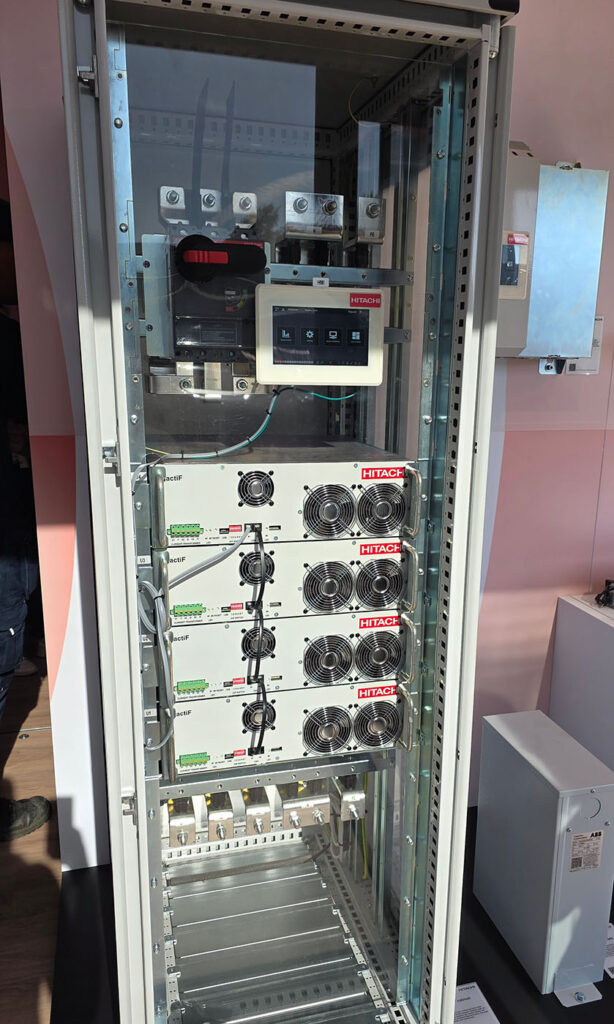
Harmonic Filters and Power Quality Solutions this image shows the hitachi PQactiF harmonic filters

Active vs Passive Harmonic Filters

Customers often ask whether they need an active or passive harmonic filter. Here’s a quick comparison:

Feature

Passive Filters

Active Harmonic Filters (PQactiF)

Harmonic Range

Fixed, tuned to specific frequencies

Wide range (2nd–50th order)

Flexibility

Static design

Programmable, modular and scalable

Space Required

Typically larger

Compact and adaptable

Applications

Targeted harmonic issues

Complex networks, multiple non-linear loads

Technical Specifications – PQactiF

A quick overview of PQactiF capabilities:

  • Network Voltage: 208–480 V (3-wire) / 208–415 V (4-wire)
  • Frequency: 50 / 60 Hz
  • Line Current Ratings: 20 A / 40 A per module, scalable up to 400 A per cabinet
  • Harmonics: Filters up to 25 orders simultaneously (2nd to 50th order)
  • Power Factor Compensation: 0.6 inductive to 0.6 capacitive
  • Communication: Wi-Fi, Modbus TCP/IP
  • Installation Options: Module, wall-mounted, or standalone cabinet
  • Noise Level: <65 dBA – suitable for commercial environments

Applications of PQactiF

PQactiF is widely used across sectors where clean, stable power is critical:

  • Industrial: steel, mining, automotive, pulp and paper, food & beverage, chemical processing
  • Commercial & Infrastructure: Data centres, hospitals, airports, universities, office buildings
  • Transport: rail, ports, e-mobility charging networks
  • Renewables: wind and solar farms requiring grid code compliance
  • Utilities (Water segment)

FAQs

What causes harmonics in electrical systems?

Harmonics are typically caused by non-linear loads such as variable speed drives, computers, LED lighting, UPS systems and EV chargers.

Will installing a harmonic filter save money?

Yes. By improving power factor, reducing equipment stress and avoiding utility penalties, PQactiF filters often provide a rapid return on investment.

How do active harmonic filters differ from passive filters?

Passive filters target specific harmonic frequencies, whereas active filters such as PQactiF continuously monitor and dynamically correct a wide range of harmonics across the system.

Benefits of Using Active Harmonic Filters

  • Compliance – Comply with grid code regulations
  • Energy Efficiency – reduced electrical losses and lower CO₂ emissions
  • Reliability – improved system uptime, fewer failures and extended equipment life
  • Flexibility – modular, scalable solutions for both new and existing systems
  • Sustainability – supports energy reduction targets and carbon neutrality goals

Why Choose IDS?

  • Over 25 years’ experience in drives and power quality solutions
  • Expertise in energy efficiency and compliance requirements
  • Ongoing support and maintenance packages to maximise ROI
  • Trusted partner for Hitachi Energy Power Quality products

Improve your power quality and safeguard your operations.
Contact IDS today to discover how Hitachi Energy’s PQactiF Active Harmonic Filters can help reduce downtime, extend equipment life and ensure compliance with grid requirements.

Call us on 0115 944 1036 or email [email protected] alternatively complete the form below and one of our engineers will be in touch.

ids website footer
ABB VP logo - denotes we are an ABB Value Provider

Let's Talk

Contact IDS today to discuss ABB drives, IE5 SynRM motors and control solutions tailored to your building, site or facility.

Please complete the form and one of our engineers will be in touch soon.

Alternatively, call 0115 944 1036  for 24/7 breakdown support or email [email protected]

Scroll to top